I
- M2.9 - Earthquake in Toses. Aftershocks continue.

It empowers individuals, schools, and communities to deploy real-time seismic sensors with zero configuration, transforming everyday spaces into nodes of a global geophysical network. Built on open hardware and open data principles, EQCitizen lowers the barrier to entry for seismic observation, making it possible for anyone, from hobbyists to educators, to participate in scientific monitoring and public safety.
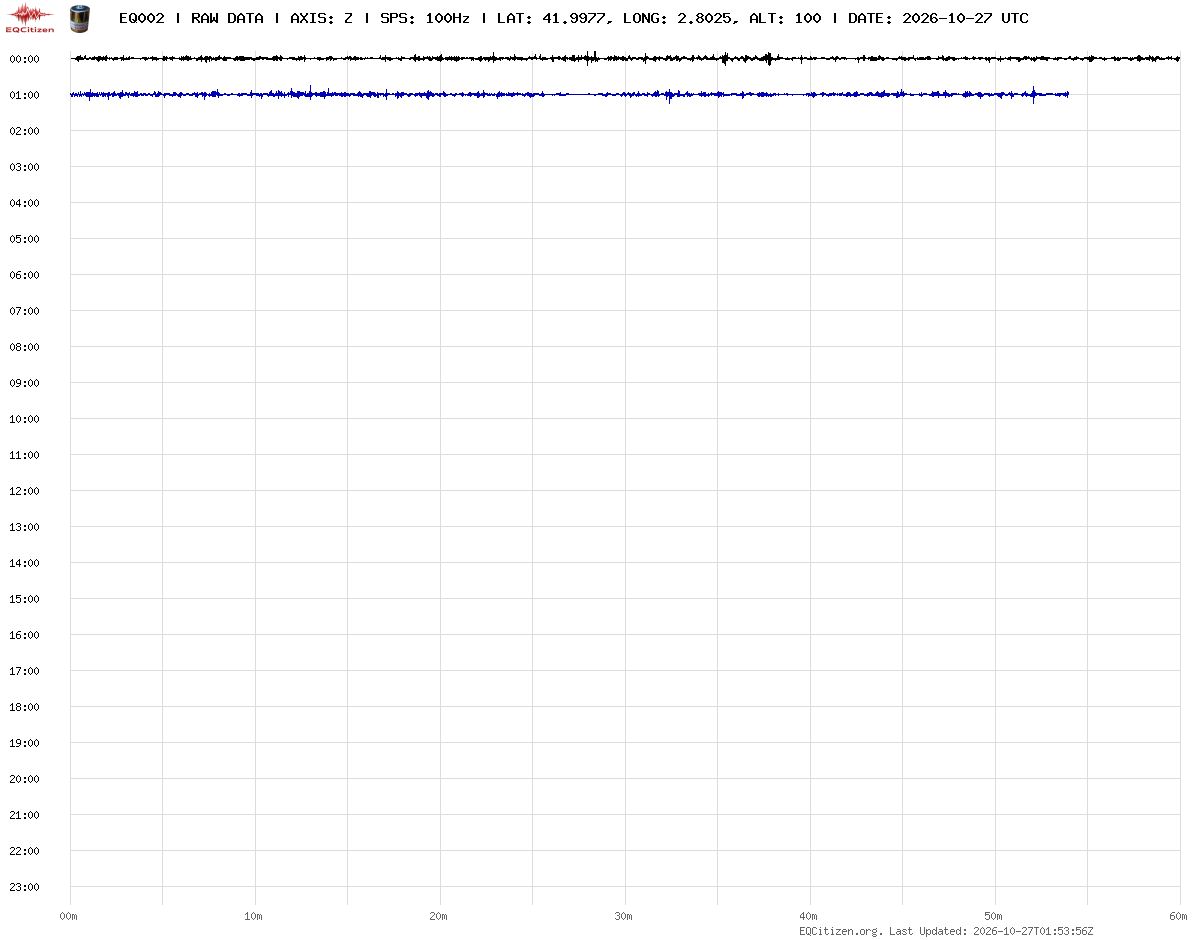
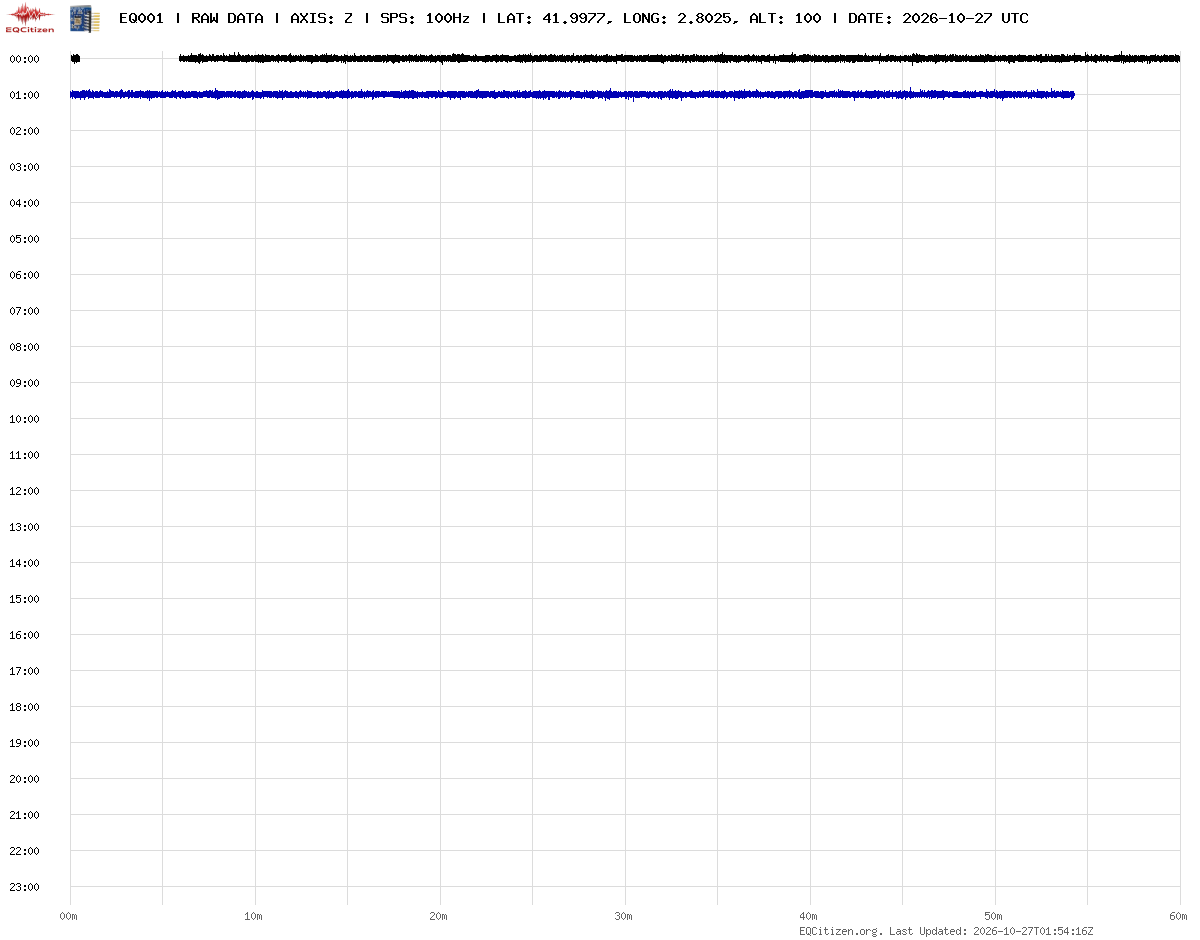
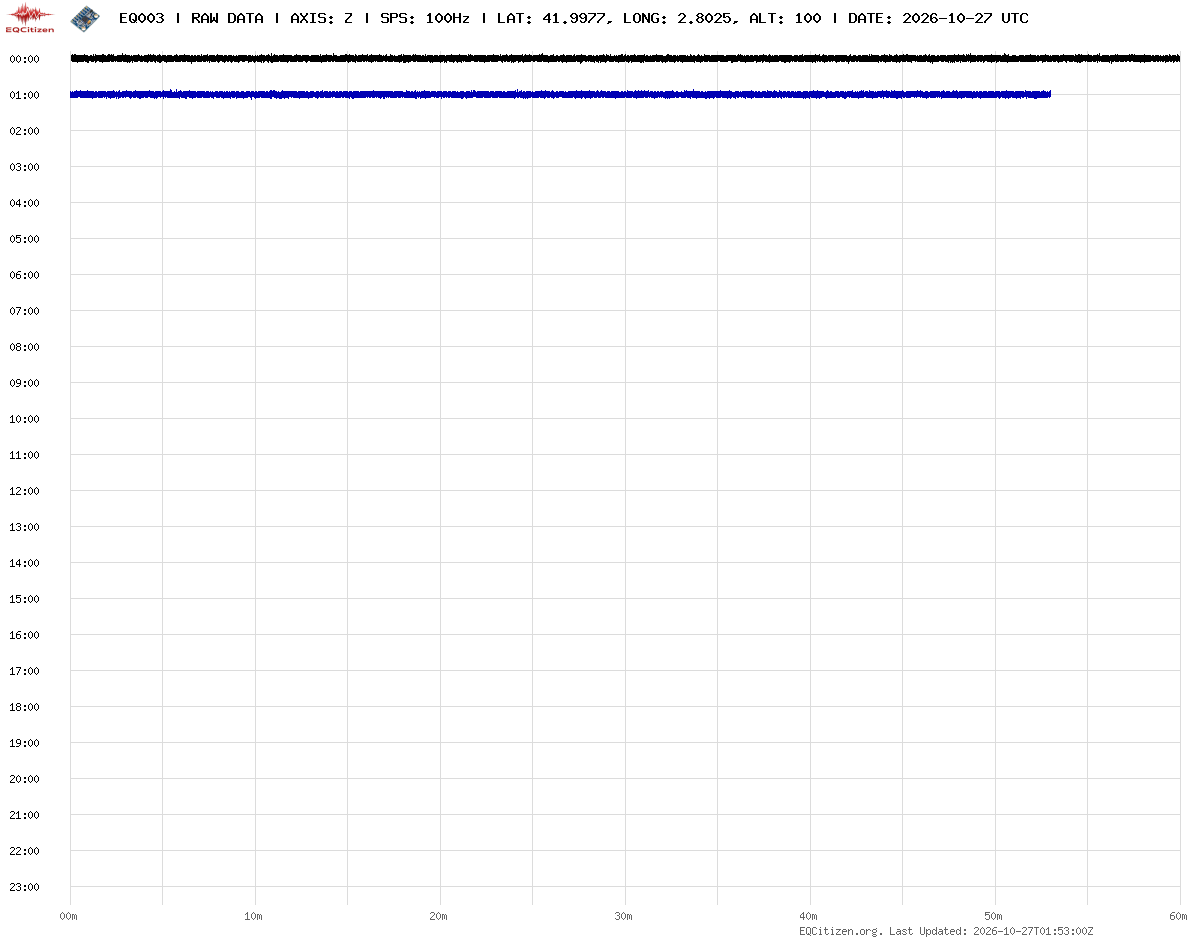
Each seismic station captures ground motion, launch alarms, save and transmits mseed data, create helicorder-style visualizations that are instantly accessible via the web, enabling transparent sharing and collaborative analysis. The system is designed to be resilient and autonomous, with automated data logging, timestamp synchronization, and optional integration with alert systems or local networks. Whether installed in a classroom, a remote cabin, or an urban basement, EQCitizen contributes to a decentralized infrastructure for earthquake awareness that value, accessibility, redundancy, and community-driven science.
By combining low-cost hardware with robust software, EQCitizen fosters a culture of curiosity and preparedness. It's not just a tool: it's an invitation to observe, learn, and connect. From local tremors to global seismic events, every signal matters. EQCitizen ensures that those signals are captured, visualized, and shared, democratizing seismology.
This system is in Beta development, so possible graphics, system glitches or interrupts are expected.
Unlike professional stations located in remote or mountainous areas -where the environment is more "quiet" and free from interference- our stations are exposed to the hustle and bustle of the population, often located in urban environments.
Traffic, construction, everyday vibrations, and even a garbage truck generate vibrations that can appear on the helicorder as abrupt movements or unusual patterns. These don't always correspond to actual seismic activity, but rather reflect daily interaction with neighbors, public services, and the constant rhythm of the city.
When interpreting the data, it's important to keep in mind that this is a citizen station: more "contaminated" by the environment, but also closer to the community. Its value lies in bringing science closer to people, even if that means living with a bit of noise.
Although data from a citizen station may seem "noisy," it also opens up a unique opportunity: for the first time, we can observe the seismic pulse of our cities. Every vibration, every pattern, every anomaly can be transformed into useful information to better understand how each urban area behaves. Over time, this data can help detect local patterns, improve emergency response, and bring science closer to everyday life. Your city has a lot to tell, too!


By clicking 'Accept all cookies', you agree to cookies being stored on your device to enhance site navigation, analyze site usage, and assist in our marketing efforts.
[ Cookie settings ]
When you visit any website, it may store or retrieve information on your browser, mostly in the form of cookies. This information might be about you, your preferences, or your device and is mostly used to make the site work as you expect it to. The information does not usually directly identify you, but it can give you a more personalized web experience. Because we respect your right to privacy, you can choose not to allow certain types of cookies. Click on the category headings to find out more and change our default settings. However, blocking some types of cookies may affect your experience of the site and the services we are able to offer.
These cookies are necessary for the website to function and cannot be disabled in our systems. They are usually set in response to actions you take to request services, such as setting your privacy preferences, logging in, or filling out forms. You can set your browser to block or alert you about these cookies, but some parts of the website will not work. These cookies do not store any personally identifiable information.
These cookies allow us to count visits and traffic sources so we can measure and improve the performance of our site. They help us understand which pages are the most and least popular and see how many people visit the site. All information these cookies collect is aggregated and therefore anonymous. If you do not allow these cookies, we will not know when you visited our site.
These cookies enable the site to provide enhanced functionality and personalization. They may be set by us or by third parties whose services we have added to our pages. If you do not allow these cookies, some of our services will not function properly. They also enable security-related storage, such as authentication functionality, fraud prevention, and other user protection.
These cookies may be set throughout the website by our advertising partners. These companies may use them to build a profile of your interests and show you relevant ads on other sites. They do not store personal information directly, but are based on uniquely identifying your browser and internet device. If you do not allow these cookies, you will experience less targeted advertising.
These cookies are set by a number of social media services that we have added to the site to enable you to share our content with your friends and networks. They are capable of tracking your browser across other sites and building a profile of your interests. This may affect the content and messages you see on other websites you visit. If you do not allow these cookies, you will not be able to see or use these sharing tools.